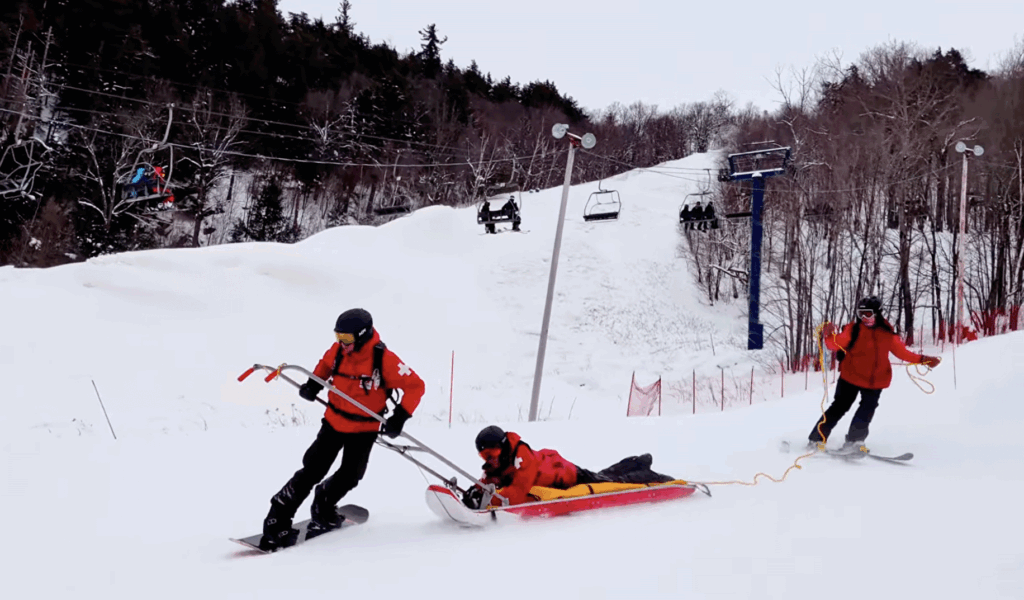
Beyond Camp Fortune’s history is a dedicated team of ski patrollers — the hill’s paramedics. As the sun rises every morning, so too does the team, as they get ready to grind the slopes and run a safety check before the crowds shuffle in.
With 42 years of patrolling experience under his belt, Pierre Pierre Blais is often the first to arrive at the resort in the morning.
As the Quebec City native steps onto the frostbitten terrain, coffee in hand, he embraces peaceful mountain air before the day’s chaos begins. He steps into the log cabin where dozens of red coats and medical kits lie before him.
Before the rest of the staff arrives, he plans and evaluates the day’s tasks. He tallies the equipment, charts for morning sweeps and drowns some coffee to awaken himself. For Blais, this is the most important part of the day. It sets the tone.
“Because I’m experienced and I’ve been doing this for years, I can then easily offer to the patrol management there whatever they need that day,” he said.
“So, if they need somebody to be trained, somebody to be evaluated, if they need somebody who’s interested in skiing with the patroller for a day, come out with me and all these options are there, right?”
Around 8:00 a.m., the resorts ski patrollers begin funneling through the front doors, followed by the ski instructors. As the day begins, the day’s Assistant Training Officer lays out a plan of safety regulations for the morning.
The (minimum) safety standard is set by the Ministry of Education, Recreation and Sports and their insurance through their membership with the Association des Stations de Ski du Quebec (ASSQ).
Through extra equipment and thorough safety checks, in many ways, Fortune’s patrol says it exceeds the minimum standard for protocols by the ministry.
Every morning, before the hill opens, patrollers perform a morning sweep to determine the hill’s safety. They install signage, check fencing and ribbons and ensure runs are free of obstacles. In the cabins and clinics, teams there make sure their intervention equipment — like toboggans, backboards or defibrillators — are functioning and ready, in case of emergency.
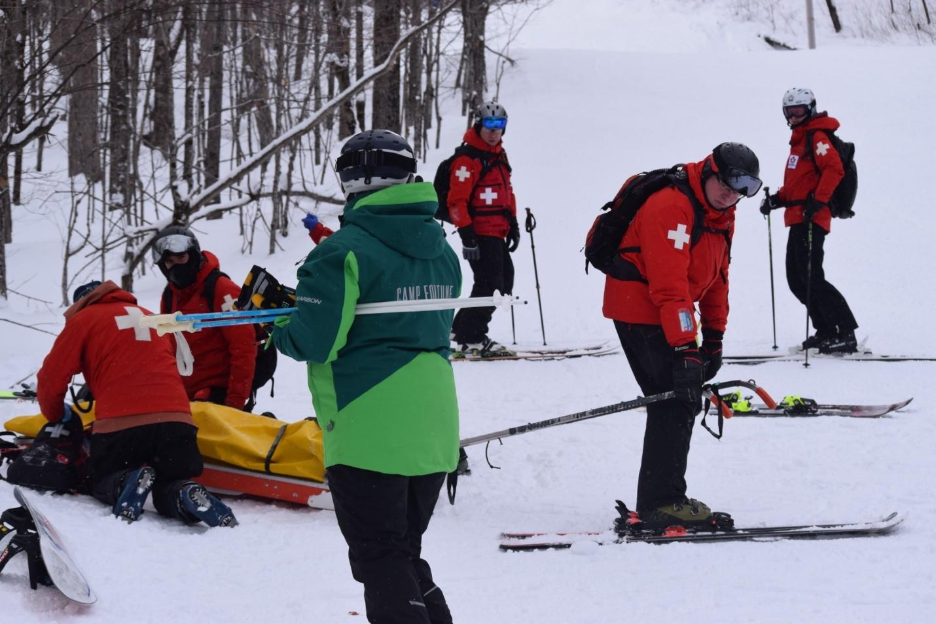
According to Blais, their duties also involve ensuring that the ski lifts are in proper operating condition.
“Once that is done, then we ski back down and let the lift operator know that they’re good to go to open for the day,” he said.
Throughout the day, patrolling duties are shared. Every day, an Area Training Officer organizes the shifts. placing a team on each side of the resort. On Skyline, five patrollers are present. On Valley, there are seven.
Because of the risks associated with skiing on the slope, Blais recommends beginner skiers take lessons from the ski instructors at the hill. He says too often, injuries form when skiers are enticed by their friends to attempt stunts beyond their skillset. It’s also why the terrain park and Valley, where the more difficult black diamond hills are, often receive the most injury calls.
“The best way to reduce your risk as a beginning skier is to take lessons. It’s that simple,” Blais said.
“There are a lot of things that come with taking lessons. The instructors will tell you about your equipment, about how to dress, what to do, what not to do, what the regulations are,” he said.
“There is so much to learn if you want to enjoy the sport. If you take lessons, you acquire all of that.”