Written by: Vasileios Tselios
The college is becoming the third academic institution in the city to get an LRT station
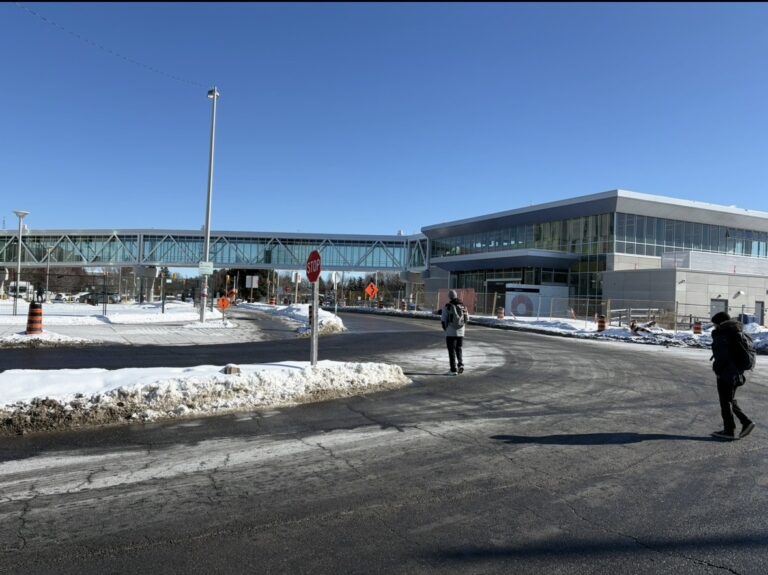
Cameron Taggart-Richardson, 21, is one of many Algonquin College students who rely on transit to get to campus. Unlike some of his peers, Taggart-Richardson’s commute is quite brief.
He describes his commute as, “Walking from my apartment all the way to the Lincoln (Fields) station and then waiting for the 74 or the 75.”
The bus ride typically takes around ten minutes.
However, Taggart-Richardson has been one of the many commuters affected by the inclement weather last month. According to Ottawa Weather Stats, there was 81.6 centimetres of snow in January, the second highest monthly total in three years.
“Due to the weather we’ve been having, they’ve been delayed from the normal five to 10 minute wait all the way up to 20 minutes,” he says.
The LRT Line 1 extension provides a direct connection from Lincoln Fields to Algonquin, cutting his potential commute time from 30 minutes to five.
Taggart-Richardson was one of 104 college commuters who participated in a survey, asking if they would use the LRT line when it opens. Seventy-three stated they would use the train compared to the 31 who would not.
The O-Train extension is expected to open in early 2027, with new stations in Westboro, Kichi Zibi, Sherbourne, New Orchard, Lincoln Fields, Iris and Algonquin College. Most survey participants based their decision on the proximity of their residence to one of these new stations.
Evan Albert, Algonquin College alumnus, argues the new line would even help those who would not use it for their commute to school.
“People are saying, since they live in Barrhaven, they wouldn’t use the train at Algonquin Station. But you could take the 75 up all the way to Algonquin, then take the train anywhere,” he explains. “It’s perfect. Why would you not want the train done?”
Albert’s sentiment of Algonquin students connecting to the rest of the city is echoed by Laine Johnson, councillor of the College Ward.
“Residents of College Ward, including Algonquin College students, have been asking for a faster way to get downtown,” says Johnson. “The LRT Line 1 extension is expected (to) provide direct, fast service to the Byward Market, UOttawa and on to Orléans for west end residents.”
The opening of the Algonquin station marks the third O-Train station dedicated to a post-secondary school. Carleton University, opened last January, is the most recent station and has been beneficial for many Carleton commuters.
Lloyd Keane, who has worked in the school’s library since 2008, has used every type of transportation to commute.
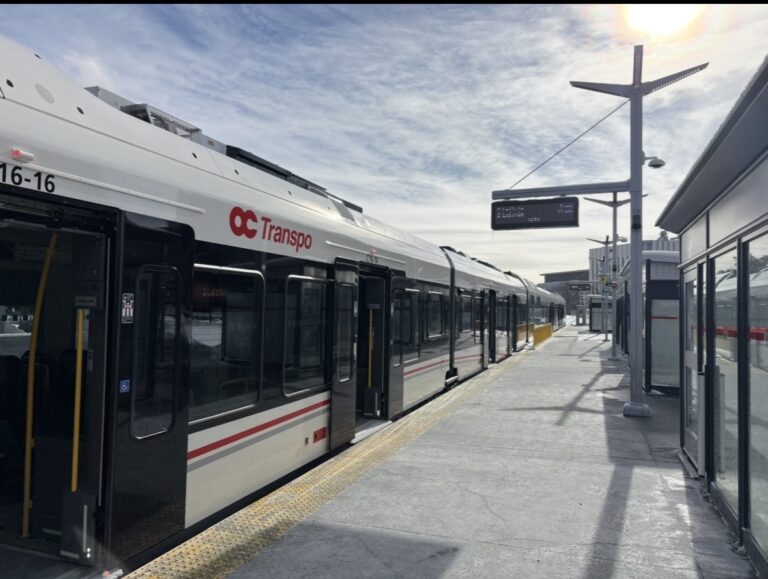
“I’ve seen the old, original train, then it was the bus, then this train,” Keane says.
Living 10 minutes away from Bayview, Keane claims all forms of transit were relatively effective for him, but he cites the train as the easiest.
“When it wasn’t running, it was a pain in the ass to take the bus. Once the train came back, it was less stressful, I think.”
For commuters, such as Keane and Taggart-Richardson, an LRT station might save a couple of minutes during their daily commute, but the impact it may have across a whole community is very hard to quantify.
Albert maintains the train can only have a positive impact on the whole student body and their transit experience.
“Think about how many people it would help. It’s not just about me,” he says. “There’s probably 1000 people in this building. Most of these people would benefit from the train in one way or another, even if they use it one night of the year.”
Looking one step further, Johnson believes the station can benefit future students, beyond simplifying their commute.
“The City has a policy of supporting increased housing density close to transit stations,” she explains. “Baseline Station will provide opportunities for new housing starts, including student-oriented housing, and will encourage more residents to opt for public transit instead of private vehicle use.”