As the city's train and bus routes have proven unreliable, new projects are hoping to improve the experience for riders
Written By: Delaney Smith, Duncan Roi, Miki Ng, Vasileios Tselios
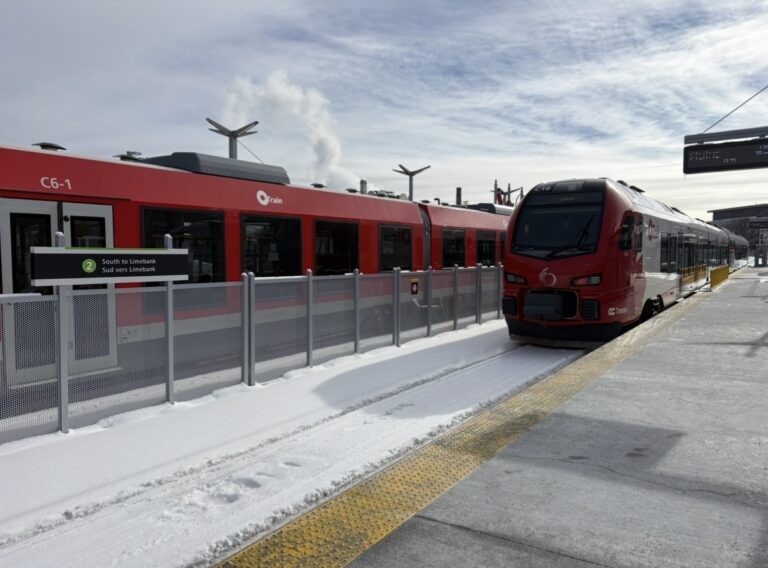
OC Transpo has had a difficult start to 2026, plagued by cancellations and delays. In January alone, OC Transpo cancelled over 6,000 bus trips alongside a number of disruptions and delays to Line 1.
On Feb. 18, City Council approved a motion from councillor Sean Devine and Shawn Menard. Among other things, the proposal advocated for OC Transpo riders to receive reimbursement when their transit routes are cancelled.
![[aria-description]](https://datawrapper.dwcdn.net/K79Ty/full.png)
Glen Gower, councillor of Stittsville and chair of the Transit Committee, has been tasked with navigating this tumultuous time for transit.
“Right now, we’ve got two major issues affecting our bus fleet and our train fleet. There’s no margin for error right now. I think things are functioning, but if we’re faced with a snowstorm (there’s) really no extra capacity on our bus fleet and our train fleet,” said Gower. “So, in the short term, it’s not good, but we have a lot of big projects to address the issues.”
The Transportation Trends Reports states that automobile drivers and passengers accounted for 69.1 per cent of all daily trips in 2022, up from 68.5 per cent in the last survey in 2011.
In a bid to properly service residents, Ottawa has approved a couple major projects. The goal is to provide more reliable and faster transit across a much larger coverage area.
Line 1 extension:
The status of Ottawa’s transit, and plans to improve it have been a discussion point for a few years now. The government of Ontario announced Stage 2 of the LRT Project in 2019. The news release cited a line 1 extension, which would provide 44 kilometres of train tracks and 24 new stations.
Seven years later Ottawa’s new Line 2 is running from Bayview to Limebank, with a stop in the Macdonald-Cartier International Airport. However, the line 1 extension is far from completion.
The O-Train Line 1 East extension is planning to connect eastern neighbourhoods, including Orléans, Blackburn Hamlet, and Beacon Hill, to downtown.
Gower explained a few of the struggles the construction has come across.
“Line 1 is a little bit behind where we would have expected it when the project started in 2019,” said Gower. “Some of that’s due to pandemic, some of that is just, you know, large projects can be delayed.”
Delays for OC Transpo projects are not uncommon for transit riders, who have become accustomed to longer waiting times.
Enrique Guzman, a Mechanical Engineering Alumni from Algonquin college is unsure if it will speed up transit times but thinks it will make commuting easier.
“I feel like it’ll make it a lot more accessible for people to not only travel the city, but also like, say there’s students who live in Orleans and go to Algonquin or Carleton, they could probably get there easier. I don’t know if faster, probably not, but easier to point A, point B,” said Guzman.
Here are some of the new stations from the extension
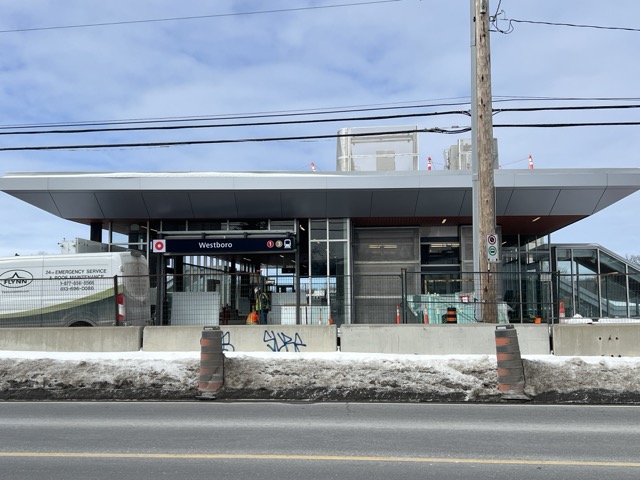
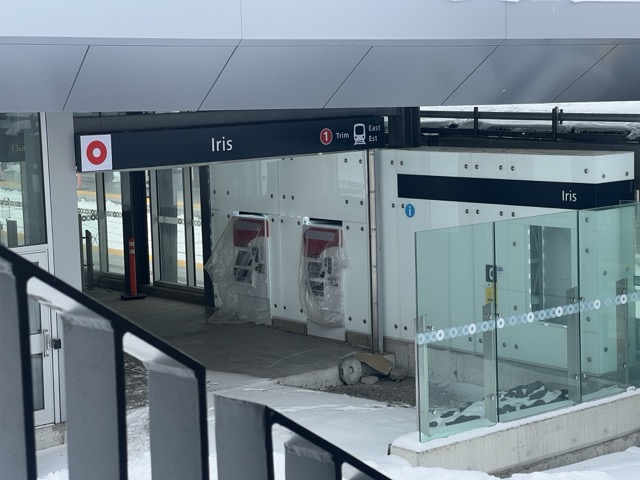
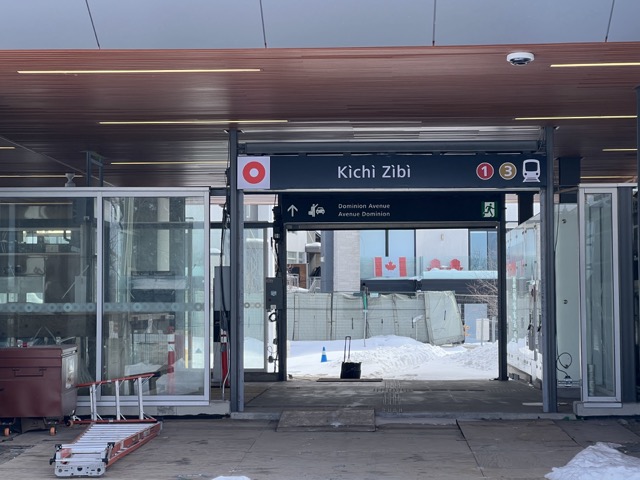
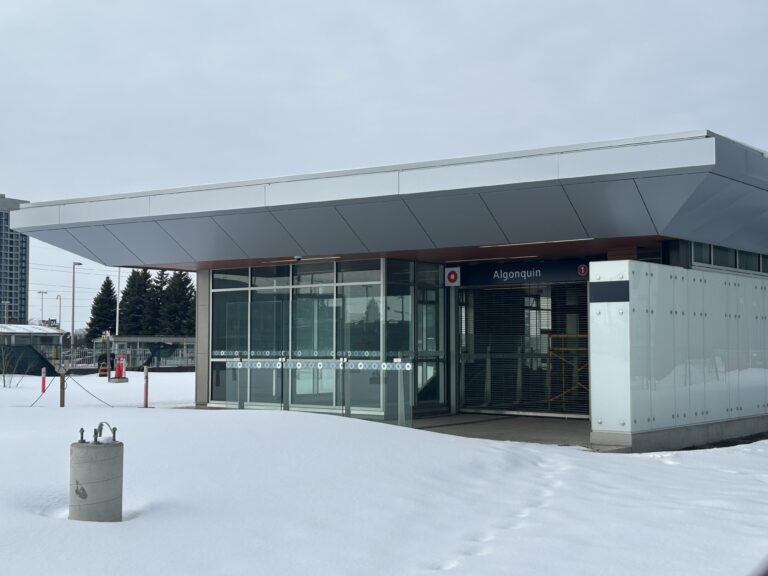
According to the City of Ottawa’s timeline, trial running and full operations for the West Extension are not expected to commence until the fourth quarter of 2026 or into 2027.
During his interview with the Capital Transit Report, Gower was optimistic about the opening of Line 1’s extension routes.
“Line 1 should be opening to eastern Ottawa within the next few weeks, all the way to Trim,” he said. “The western portion, which is two legs to Moodie Drive in the west and one to Algonquin College heading south, is on track to open in about a year from now.”
Two days later on Feb.12, OC Transpo announced the west extension will be delayed even further, with trials running during June at the latest.
A history of delays is a consistent problem for the city’s transit, however concern is also focused on the current state of transit.
“I don’t hear a lot of folks saying, ‘I can’t wait to get on transit,’” Ward 8 Coun. Lane Johnson said. “What I hear right now is a lot of people saying, ‘I can’t use transit to get to where I want to go, and I’m about to lose my mind.”
“I’m pretty satisfied, whenever I use it, it’s on time. You don’t usually have to wait long,” said Guzman. “I have heard it’s very packed for students and especially now that people like government workers are back in the office, I’ve heard that it’s really busy.”
He suggested an increase in the number of trains available during the transit.
Line 1 has experienced multiple services over its lifespan, including a wheel bearing complication, which has caused the current fleet’s number of trains to drop.
“On the train, there’s an issue with wheel bearings. That means that some of the fleet has been parked until wheel bearings can be replaced,” said Gower.
“I believe 21 trains available to run, and they’re running 15 trains. Usually we would have 26 trains available. So we’re on reduced capacity right now due to those wheel bearing issues.”
According to Gower, even the full fleet of 26 trains would not be enough to service the full Line 1 extension. However, he is optimistic the service issues can lessen significantly in the coming years.
“The success we saw in Line 2 and Line 4, those lessons will be applied to future launches. And I think every subsequent launch should become that much more smooth and that much more reliable in the future.”
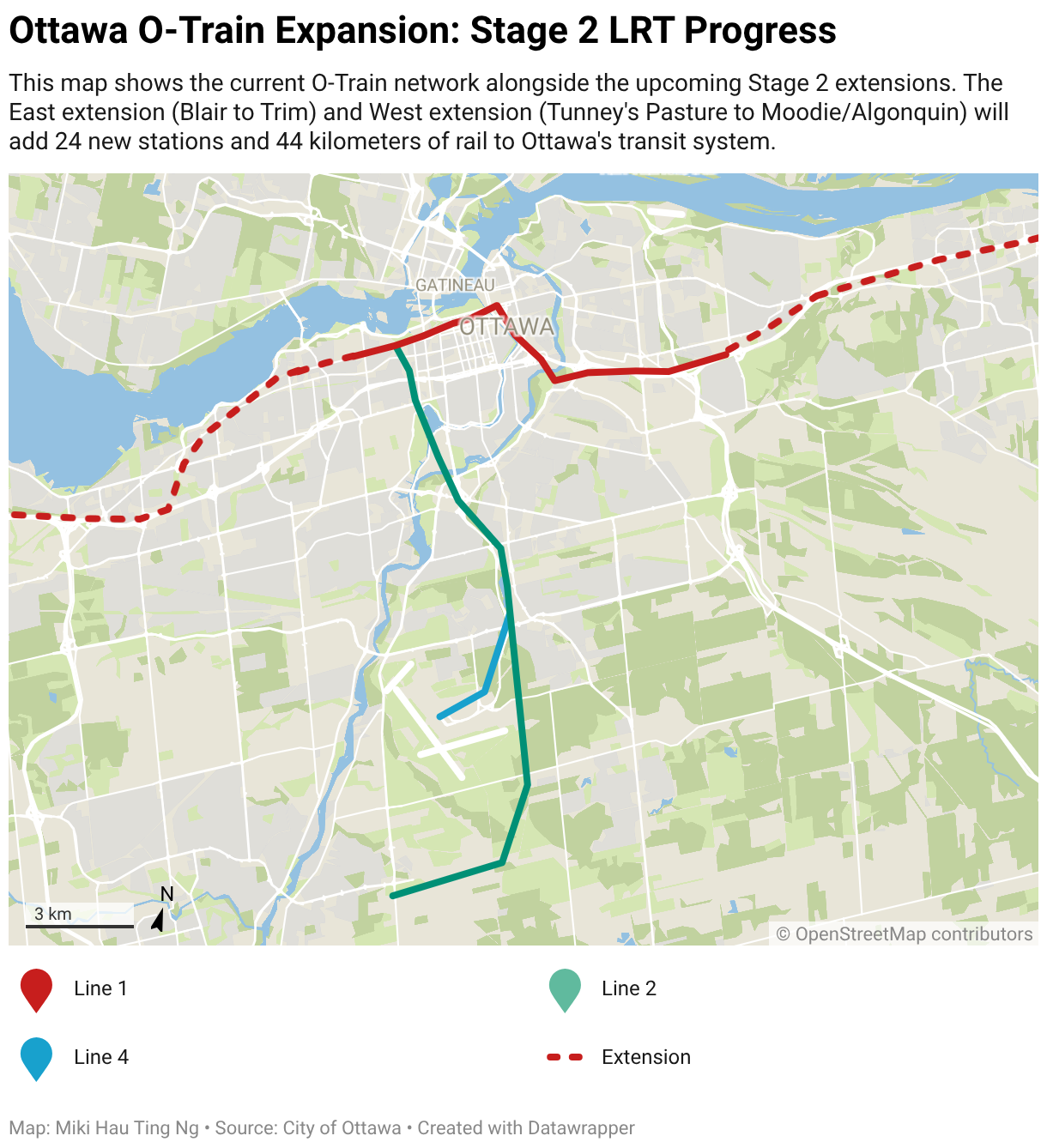
The Line 1 extension is one of the many projects around the city’s transit and improving the experience of OC Transpo riders. Some initiatives, such as the motion to refund OC Transpo riders who experience delays, are geared towards improving the company’s relationships with Ottawa citizens.
Despite these efforts, most transit projects in the city are experiencing a variety of issues. Unlike the delay problems of the LRT extension, the Baseline bus corridor is facing issues of funding in the infancy of its construction.