How young adults are turning to Muay Thai for structure, balance and identity
At 7 p.m. on a Wednesday, the heavy bags at the Jack Doyle Athletic Centre swing in quiet rhythm. Gloves snap against leather. Feet pivot. Breath shortens and steadies again. What looks like aggression from the outside feels, from within, like order.
For Naji, that rhythm has become something essential.
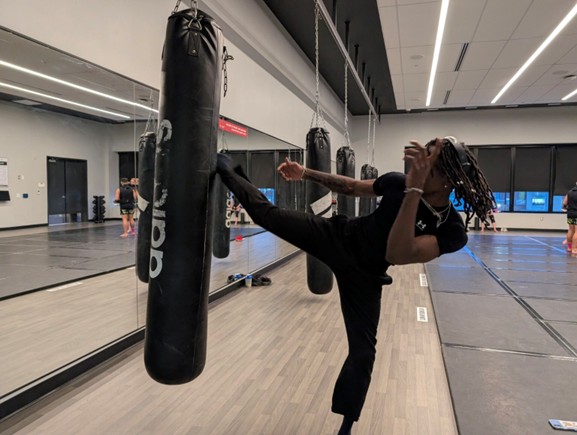
After starting school, Naji was looking for something physical to anchor his routine. College life brought new pressures, new expectations and long stretches of sitting still. Muay Thai offered movement but more importantly, structure.
“Muay Thai helped me with discipline,” he said. “It motivates me to come to the gym more.”
What began as a way to stay active quickly became part of his identity. Training days shape his schedule. Classwork adjusts around evening sessions. The gym is no longer optional it is built into his week.
He admits nutrition is still a challenge. But training forces awareness.
“I’m exerting energy, so I have to put energy in my body,” he said. Before class, he often eats fruit sometimes watermelon with lime juice for electrolytes.

What looks like power is actually control. Fighters bow before sparring. Pads are held with trust. Technique is refined through repetition. There is strategy, like chess and patience.
Muay Thai, for Naji, is not about fighting someone else. It is about staying accountable to himself.
But he isn’t alone in that experience.
Josh Holmes arrived at the gym during a period when his life felt unbalanced.
“A lot of school, and I had a death in the family,” he said. “All my friends had moved away, so I figured, why not? I needed to get back in shape and meet some people, take my mind off everything.”
At first, his reasons were physical. But once he began training consistently, the changes extended beyond fitness.
“It’s changed everything,” Holmes said. “If you really want to be healthy, you have to make time for it. My entire day plan has been shifted.”
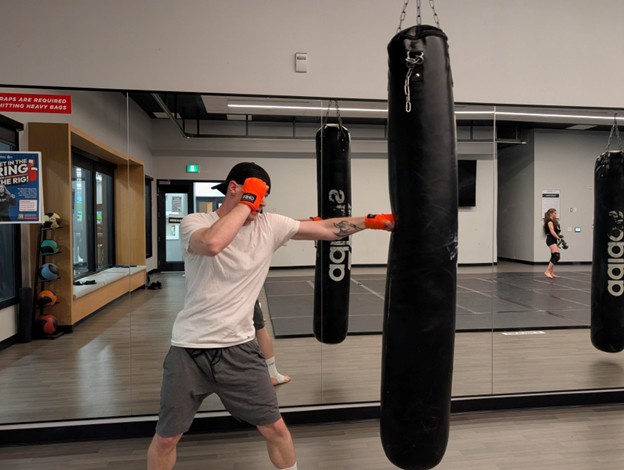
Meal prep replaced takeout. Drinking stopped. Training became non-negotiable.
Muay Thai did not teach him discipline from scratch, he explained but it reinforced it.
“If you want to get really good at something, you have to sell yourself to it. It has to be your number one.”
For Sara Darboy, a second-year Food Science student, the motivation was more personal. After being attacked, she began training to learn how to defend herself.
“Learning how to defend myself is probably one of the bigger reasons,” she said.
Ashley, a student in the Bachelor of Early Learning and Community Development program, describes the sport as balance. With ADHD, she finds the outlet especially valuable.
“It gets the energy out,” she said. “It makes me feel balanced.”
Holmes believes the growing visibility of combat sports online has made them more accessible. But the appeal runs deeper than aesthetics.
In a time when many young Canadians struggle with anxiety, isolation and pressure to define themselves quickly, Muay Thai offers something structured and physical. The body becomes accountable. The schedule becomes intentional. Improvement is measurable.
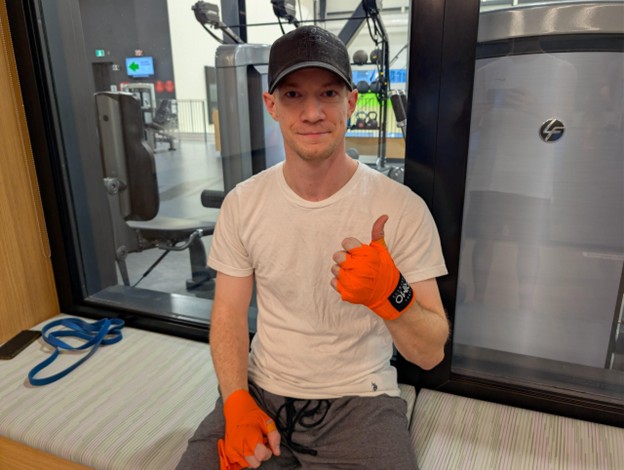
The heavy bag does not judge. It only responds. Strike. Guard. Reset. And in that response, many find not just strength but steadiness.